Redemption Timelines Connecting Free Play Credits with Dealer Sessions Across Evaluated Mobile Platforms
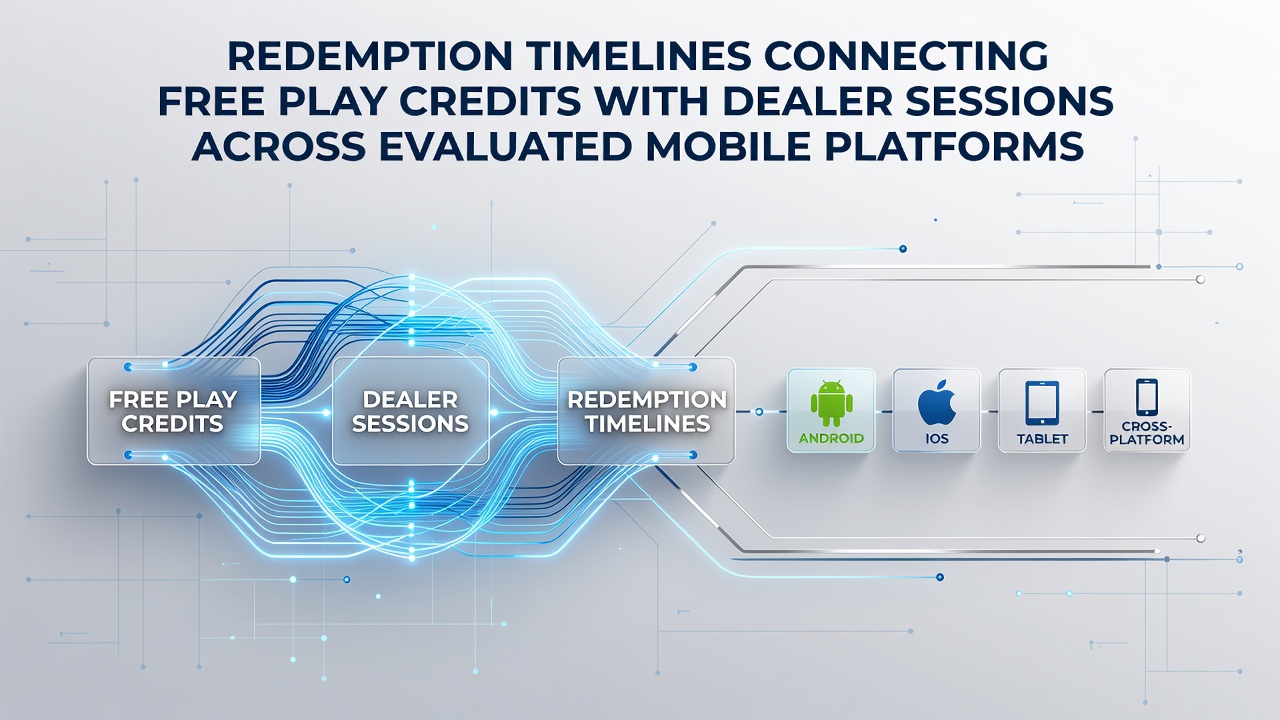
Redemption timelines for free play credits that connect directly to live dealer sessions on mobile platforms follow structured sequences that vary by operating system, regulatory jurisdiction, and platform evaluation criteria, where initial credit activation triggers a verification window that typically spans several hours before live table access becomes available. Evaluated platforms process these connections through layered authentication steps that include account verification, credit allocation confirmation, and session scheduling, which ensures compliance with regional gaming standards while maintaining operational flow between promotional balances and real-time dealer interactions.
Platform-Specific Activation Sequences
Android and iOS applications handle credit redemptions through distinct pathways because device-level security protocols influence how quickly promotional balances convert into dealer session eligibility, and data from multiple platform assessments shows that Android users often complete verification faster due to integrated payment system linkages. Observers note that iOS platforms require additional certificate checks that extend the timeline by up to one full business day in certain jurisdictions, whereas Android evaluations frequently record same-day transitions when biometric authentication aligns with the platform's reward ledger.
Those who've examined cross-platform reports find that free play credits designated for live dealer environments follow a consistent pattern of initial hold periods followed by release notifications, and these patterns appear across apps that have undergone third-party testing for mobile compatibility. The sequences usually begin with credit deposit confirmation, move through risk assessment modules, and conclude with session token generation that grants entry to tables featuring real dealers.
Integration Points Between Credits and Live Tables
Evaluated mobile platforms establish integration points where free play credits transition into dealer session access through automated ledger updates that sync with backend servers, and this process incorporates time-stamped logs that document each stage from allocation to table entry. Research indicates that the average interval between credit activation and dealer session availability ranges from four to thirty-six hours depending on the volume of concurrent redemptions and the platform's server load during peak periods.
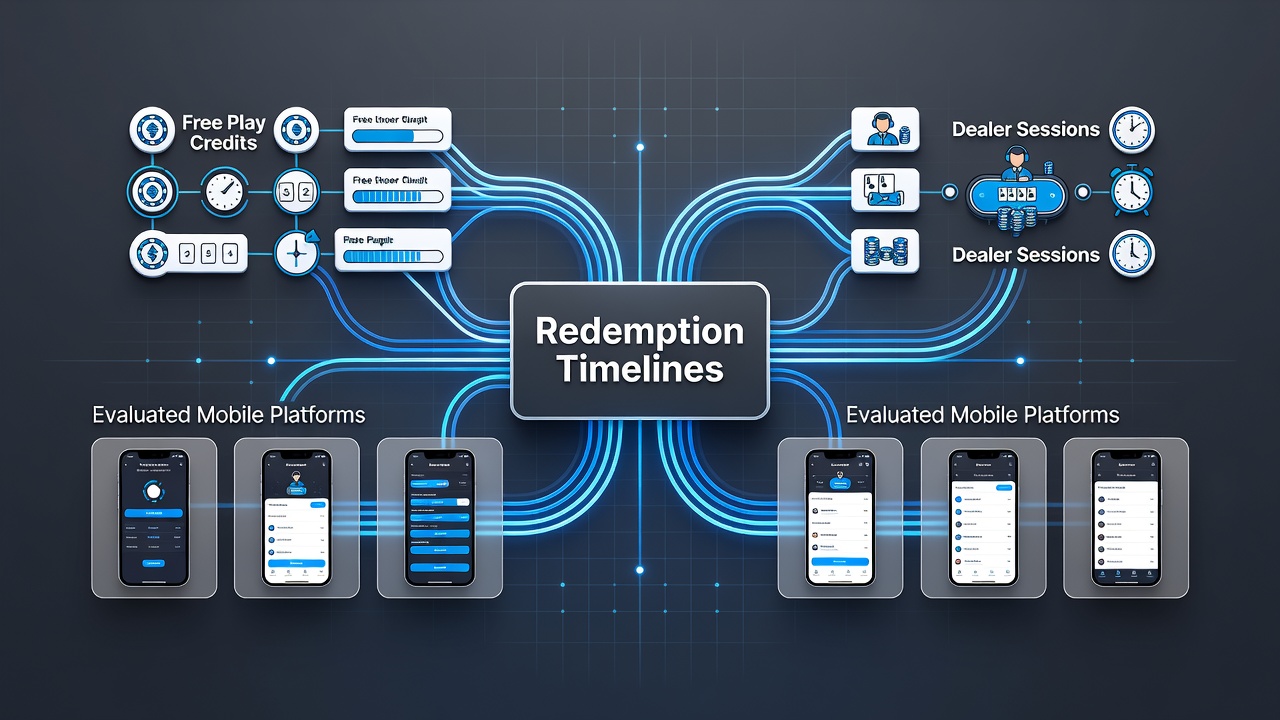
Platform assessments reveal that live dealer sessions require dedicated bandwidth allocations that platforms reserve in advance, which means redemption requests submitted during high-traffic windows encounter extended confirmation phases compared to off-peak submissions. The Nevada Gaming Control Board reports document similar synchronization requirements for mobile operators under its oversight, where credit-to-session pathways must maintain audit trails that link promotional activity directly to table participation records.
Regulatory Timelines and June 2026 Updates
Jurisdictions across North America schedule periodic reviews of mobile redemption protocols, and assessments scheduled for June 2026 will evaluate how updated dealer session interfaces accommodate larger volumes of free play credit redemptions following infrastructure enhancements. These reviews focus on latency reductions and verification streamlining without altering existing compliance frameworks that govern credit expiration and session eligibility.
One study conducted by researchers at the University of Nevada examined redemption data across multiple mobile operators and found that platforms incorporating real-time dealer queue management achieved faster credit-to-session transitions than those relying on batch processing systems. The findings highlight how sequential reward pathways operate within regulated portable gaming environments where session access depends on prior credit validation steps.
Cross-Jurisdictional Variations in Processing
Canadian provincial regulators, including the Alcohol and Gaming Commission of Ontario, maintain separate guidelines for mobile credit redemptions that connect to live dealer formats, and these guidelines establish maximum allowable intervals between credit activation and table access to protect player balances during transition periods. Evaluated platforms operating under these rules demonstrate consistent adherence to published timelines that range between twelve and forty-eight hours based on account verification status.
Industry reports compiled by the American Gaming Association track redemption performance metrics across evaluated mobile platforms and note that platforms with integrated live dealer modules reduce average processing times compared to those that route credits through separate promotional engines before granting dealer access. The data shows clear correlations between platform architecture choices and the speed of credit-to-session linkages.
Evaluation Metrics for Redemption Efficiency
Platform evaluations measure redemption efficiency through metrics that include verification completion rates, session token issuance speed, and successful table entry percentages after credit allocation. Those metrics reveal that platforms prioritizing direct ledger integration between promotional accounts and live dealer servers achieve higher completion rates within the first twenty-four hours following credit activation.
Additional assessments examine how free play credits interact with dealer session scheduling systems, particularly when credits carry specific usage windows that align with live table availability. Evaluators document cases where platforms automatically reserve dealer seats upon credit redemption, which shortens the overall timeline from allocation to active participation.
Conclusion
Redemption timelines connecting free play credits with dealer sessions across evaluated mobile platforms reflect coordinated technical and regulatory processes that prioritize verification integrity alongside operational efficiency. Data from multiple jurisdictions demonstrates that these sequences adapt to device types, server capacities, and upcoming infrastructure milestones such as those planned for June 2026, while maintaining consistent audit standards that link promotional activity to live table engagement. Platform assessments continue to refine these pathways through ongoing analysis of activation sequences, integration points, and cross-regional compliance requirements.